
Castillo de la Triste Condesa
Castillo de la Triste Condesa
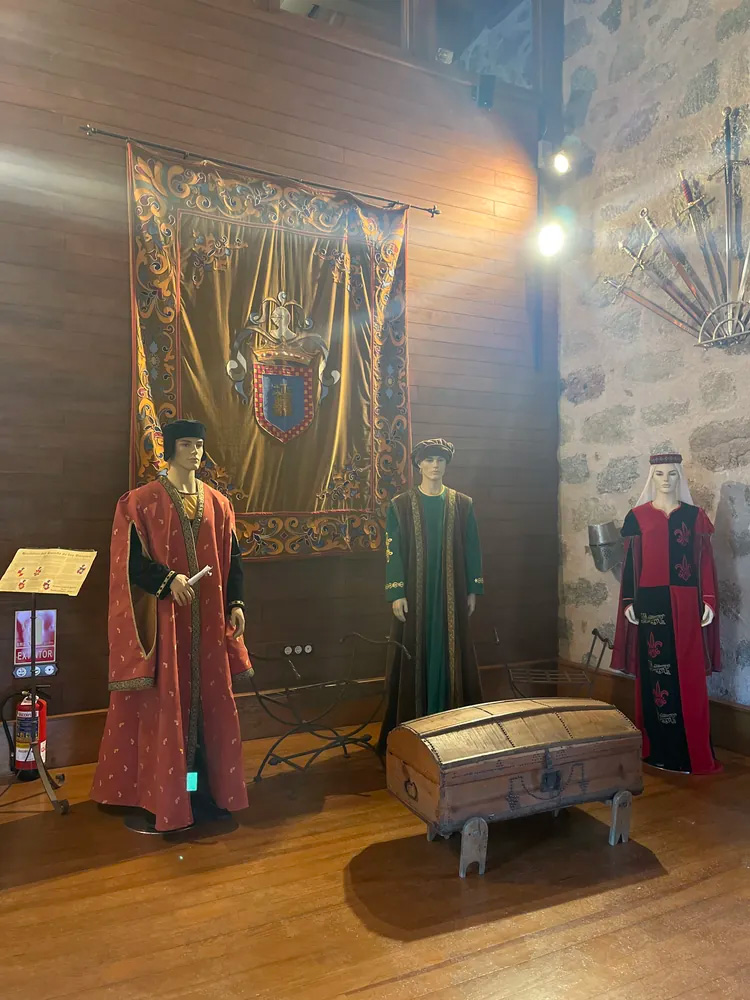
He ordered this castle built to match his position, and he died in exile, stripped of his wealth. He is Don Ruy López Dávalos, whom we already talked about in the first audio of this castle. In this room, the principal historical figures who inhabited the castle and have a significant connection to it are represented. Dávalos is born in Úbeda, Jaén, in 1357, into a family of hidalgos that had emigrated from Navarra in the 13th century. He receives the education of the "fronteros," who were responsible for repelling Granada's aggressions and also conducted some raids into the Nasrid kingdom. Because of his actions in battle, he gains the trust of King Juan I, who appoints him chief chamberlain of the Prince of Asturias. He keeps the post when the prince becomes King Enrique III. Dávalos becomes one of the most influential figures in the Royal Council, taking part in numerous political decisions and military operations, until he is granted the sword of Condestable, one of the highest honors of the time, previously reserved for the high nobility. Along with the title of Condestable of Castile, he receives numerous lordships that bring him great wealth. Among them is the lordship of Arenas, where he orders the construction of this palatial-style castle. His life is a constant mix of military struggles and conquests, intertwined with the intrigues of the Castilian court. Enrique III dies, and so does his brother Fernando, who had acted as regent for the heir, Juan II. Fernando's sons, Juan and Enrique, disregard Dávalos' advice to remain united and vie for the regency. Dávalos sides with Enrique, who kidnaps King Juan II to keep him under his dominion and influence. In the end it is Juan who, aided by Don Álvaro de Luna, frees the king and punishes those who had held him captive. Don Álvaro acquires a significant portion of Dávalos' fortune, including the title of Condestable of Castile. And Dávalos, stripped of his wealth, dies in exile in Valencia under the protection of King Alfonso V of Aragon.