
Palacio del Infante Don Luis de Borbón
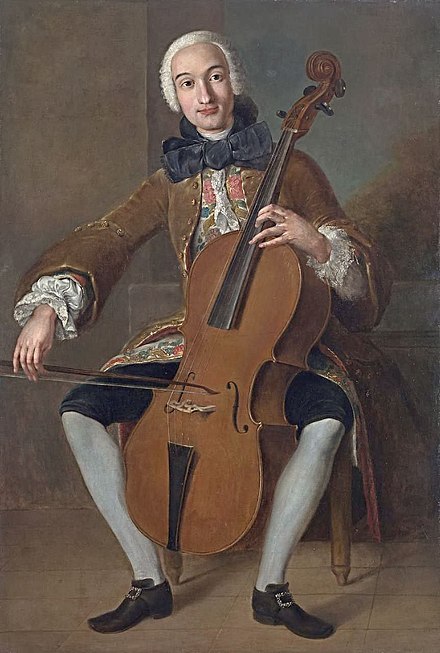
An Italian cellist who ends up playing for an exiled prince. Luigi Boccherini is born in 1743 in Lucca, Italy, into a family devoted to music. He becomes a composer and cellist, and one of the founders of musical classicism.
He works with his family at the Imperial Court in Vienna. There he hears composers like Haydn and Gluck. After some time at the Court, he returns to Italy, where he plays in the orchestra of Giovanni Battista Sanmartini, one of the founders of the modern symphony. In 1767, Pignateli, the Spanish ambassador in Paris, invites him to settle in Spain. Other artists and composers have achieved great success and economic stability at the Spanish Court, so he agrees. But several attempts to enter the Real Capilla fail. Finally he is welcomed and protected by the Infante Don Luis Antonio, whom he accompanies in his exile.
In his service he composes numerous works, some considered masterpieces: the first version of the Stabat Mater and the Musica notturna di Madrid, both written in Arenas de San Pedro. After the Infante's death he moves to Madrid and asks the King for a pension. He receives it as a cellist, for life, but without a position. Later he keeps composing for European Courts, such as the King of Prussia's, and conducts the orchestra of the Countess of Osuna.
Arenas de San Pedro still remembers him with the Luigi Boccherini Festival, held every year on the last weekend of May. There you can enjoy concerts of his works, performed by some of the best musicians on the national scene.